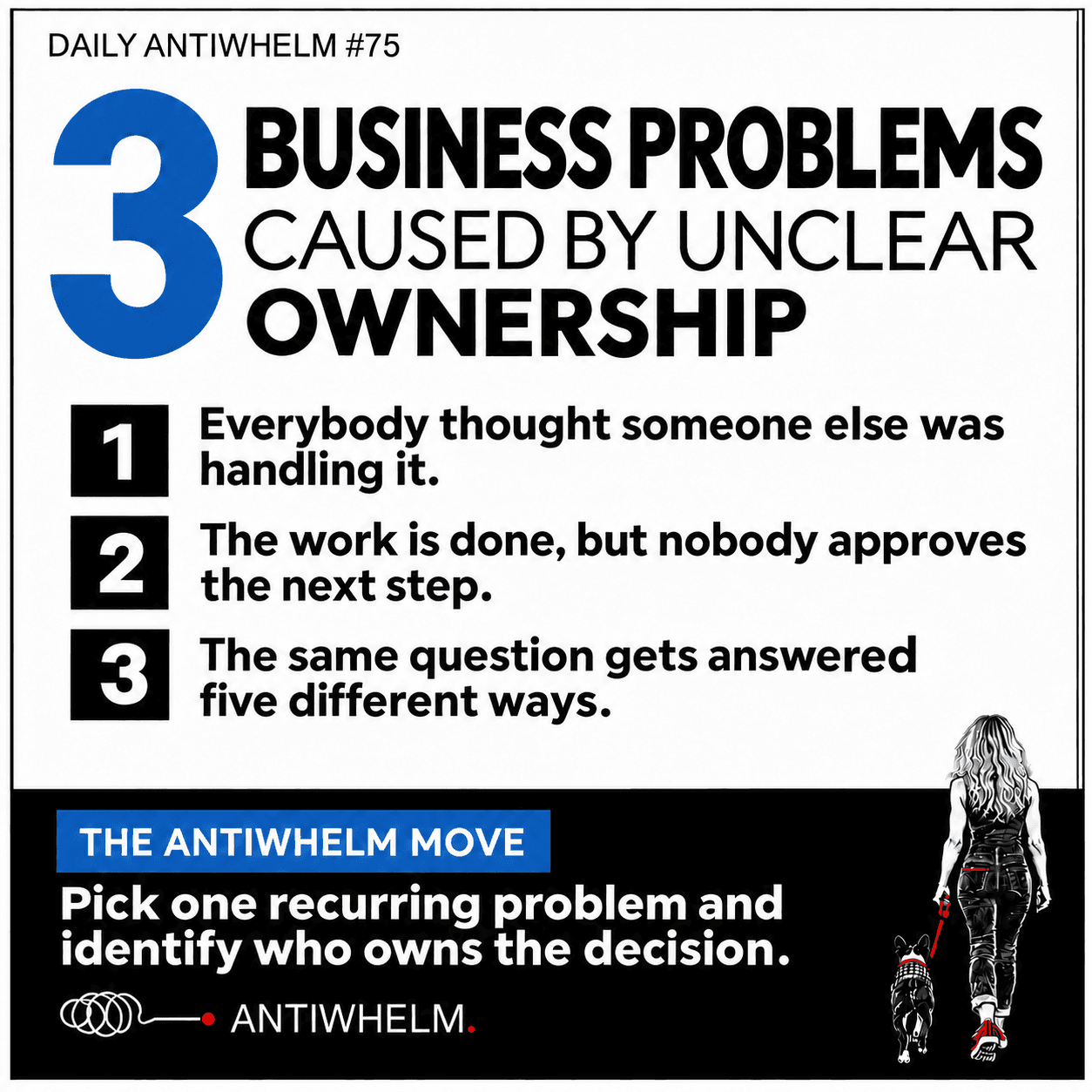
3 Business Problems Caused by Unclear Ownership
The work should have been finished yesterday. Everyone involved agrees that it matters. Nobody can explain who was supposed to do the next part.
You send another reminder. The work moves a little, then stops again.
Before asking people to communicate more, make the responsibility clear. A team can talk about a task all week without anyone being responsible for moving it forward.
1. Everybody thought someone else was handling it
Several names are on the message. One person assumes another has replied. The customer hears nothing.
Sharing information doesn’t automatically assign the next action.
Name the person who will reply, send the document, or arrange the handoff. Confirm what they’re taking responsibility for and when it needs to happen. Give them a way to flag a problem before the deadline passes.
2. The work is done, but nobody approves it
Someone finishes their part and waits. The approver is unclear, unavailable, or unaware that a decision is needed.
Define what actually needs approval and who can give it. Include the information that person needs, the time available, and what happens if they’re away.
Question whether every small decision needs the same approval. Keep necessary checks, but don’t turn all completed work into a queue at one person’s desk.
3. The same question gets five answers
A customer asks about an exception. Different staff members offer different answers because nobody owns the rule.
Choose who can decide it. Record the answer somewhere the team uses, including the limits and the point at which a case needs another look.
People need a reliable answer they can find, not a memory test about which conversation contained the latest version.
The Antiwhelm Move
Pick one recurring problem and identify who owns the decision.
Write down the next action, the person responsible, and what they’re allowed to decide. Ask them to confirm the agreement. Make the handoff clear to everyone involved.
Try it on the next real task. If it still stops, find the missing information or authority rather than adding another reminder.
Clear ownership gives people a way to act. Give the next step a name.