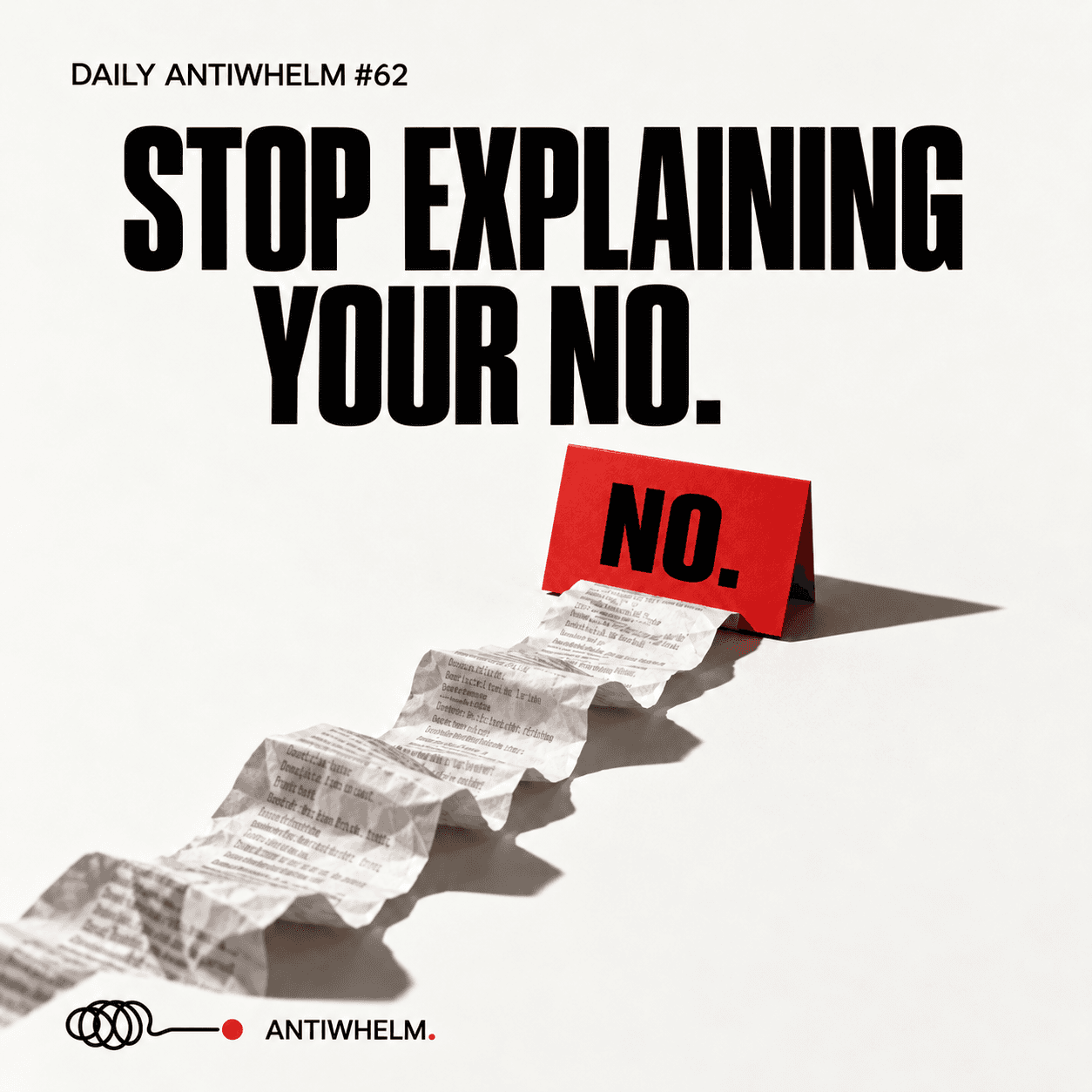
Stop Explaining Your No
Someone asks if you can help this weekend. You say you can’t.
Then you keep talking.
You explain the errands, the work you need to finish, and how tired you’ve been. You mention a family plan that might happen. Before long, you’re giving a detailed account of a Saturday that belongs to you.
You already knew your answer. What are you trying to prove?
You don’t need to present your whole calendar
Sometimes an explanation helps. You need to arrange coverage at work. You’re changing a plan you already agreed to. Someone close to you asks a reasonable question.
But an ordinary request doesn’t always need your full schedule in reply.
“I can’t take that on” may be enough. So might “I’m going to pass” or “That doesn’t work for me.”
You can say it warmly. Thank someone for thinking of you. Let them know you hope the event goes well.
Then stop.
You don’t need to make your day sound impossible before you’re allowed to keep it for yourself. Wanting a free evening still counts, even if you could technically fit something else in.
Notice when you’re asking them to approve the answer
You explain that you’re busy. They suggest a different time.
You say you’re tired. They promise it won’t take long.
Now you’re searching for another reason, hoping this one will finally settle it.
Maybe they’re trying to solve what they think is a scheduling problem. Maybe they’re pushing. Either way, another paragraph may keep a conversation going that you wanted to finish.
You can listen without changing your decision. You can repeat your answer without making it harsher.
“I understand. I’m still not available.”
They may not like it. You don’t have to keep talking until they do.
The Antiwhelm Move
Think of one request you’re putting off answering because you’re trying to find the perfect explanation.
Decide what you actually want to say. Write one clear sentence.
Before you add more, ask: Does this person need that information? Or am I hoping enough detail will make saying no feel comfortable?
Give the information that’s needed. Leave out the rest.
If you’ve already made a commitment, address it honestly. If you’re declining a new request, let the answer be an answer.
You can be kind and brief.
Your life is not a project. Go live it.
This is Antiwhelm.