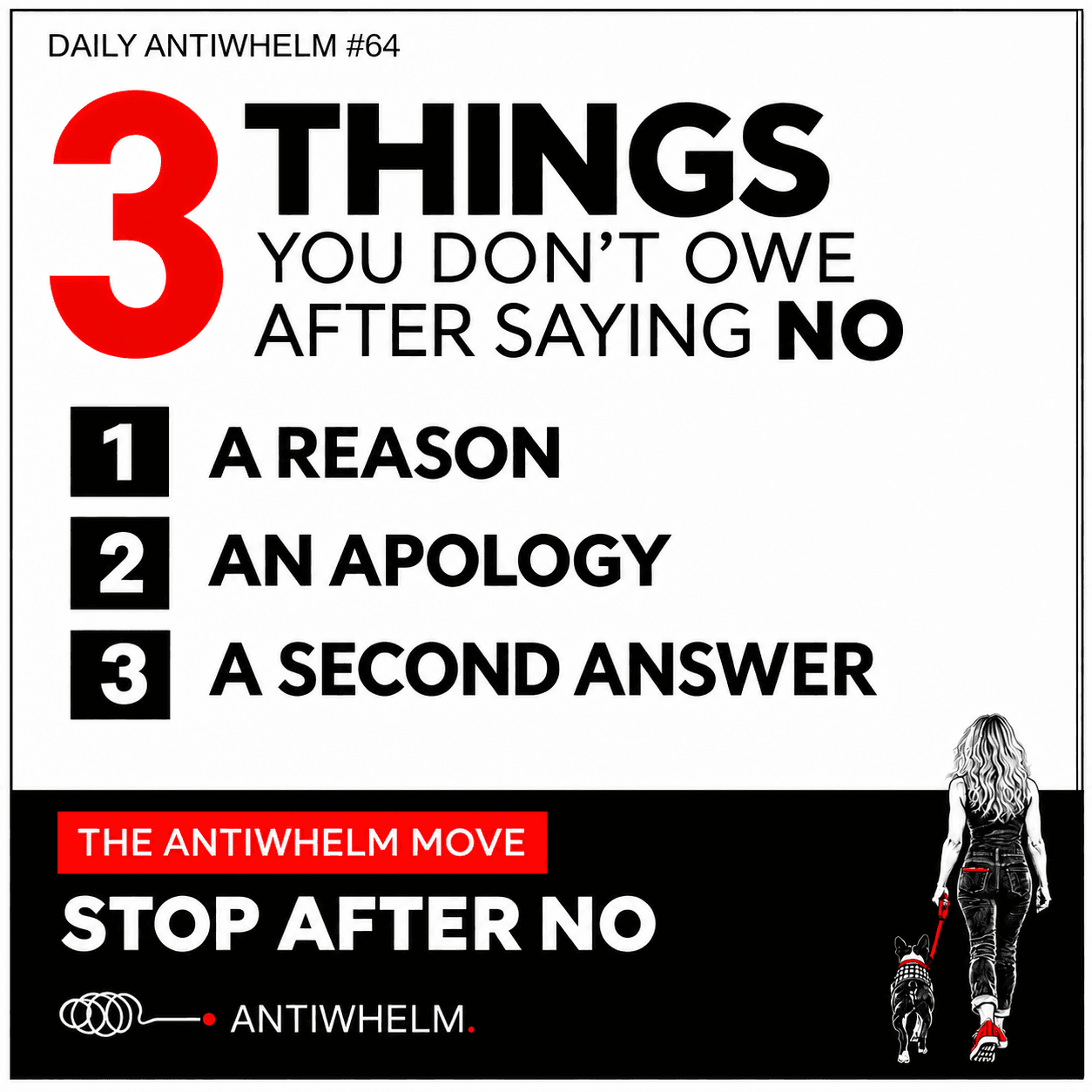
3 Things You Don’t Owe After Saying No
You say you can’t help on Saturday. Someone asks why. You explain your plans, apologize for having them, and start wondering whether you could move a few things around.
By the end of the conversation, Saturday is back on the table.
Sometimes the hardest part of saying no comes after you’ve already said it. You keep adding things because silence feels uncomfortable. The other person hears an opening.
You can stop before that happens.
1. A reason they approve of
An explanation can be useful. You’re arranging work coverage, changing an agreement, or talking something through with someone close to you.
But an ordinary invitation doesn’t require evidence that your other plans deserve to exist. “I’m going to pass” is an answer, even when the evening you’re protecting has nothing booked into it.
If someone asks again, notice whether they need information or want a reason they can argue with. You don’t have to offer your whole calendar for review.
2. An apology for the answer itself
You can care about someone’s disappointment without treating your decision as wrongdoing.
“Thanks for thinking of me. I can’t make it” can be warm and complete. You don’t need to apologize three times to prove you’re a considerate person.
If you’ve broken a promise or caused a problem, acknowledge that. Declining a new request is a different situation. Don’t automatically borrow the language of having let someone down.
3. A different answer the second time
“But it’ll only take an hour.”
“We really need you.”
“Are you sure?”
Those replies can make you feel as though you have to start deciding again. Unless something relevant has changed, you don’t.
“I understand. I’m still not available.” Then leave the answer where you put it. You can end the conversation without winning agreement.
The Antiwhelm Move
Choose one brief refusal you can actually imagine saying. Use your own words.
Say it. Leave out the extra case you were about to make. Let there be a pause.
If the request comes around again, repeat your answer instead of expanding your defense.
A reason, an apology, and a second answer aren’t the price of being allowed to say no.
Stop after no.